The Woman Who Gathered the Stars: How Annie Jump Cannon Catalogued 350,000 of Them
Why are stars sorted into O, B, A, F, G, K and M? The Harvard spectral classification still used today came from Annie Jump Cannon at the Harvard College Observatory. She could classify three stars a minute, catalogued around 350,000 in her lifetime, and in her scheme even our Sun is a G-type star.
Astronomers today sort the stars into seven types — O, B, A, F, G, K, M. That scheme, the Harvard spectral classification used everywhere in the world, came from a woman at the Harvard College Observatory named Annie Jump Cannon. She put the tangled spectra of hundreds of thousands of stars into order, and over her lifetime catalogued around 350,000 of them by hand. Even the Sun over our heads is, in her system, a “G-type star”.
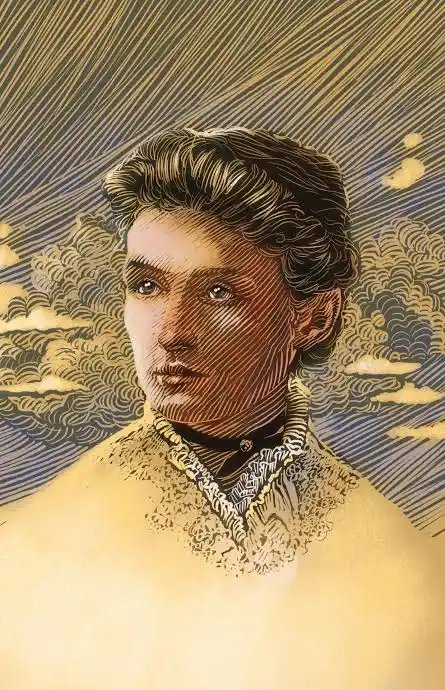
1. A cosmic code scattered across the floor
Imagine pushing open the door of an enormous library and finding that the pages of several hundred million books have been torn out and thrown on the floor in a heap — and every one of them is written in an alien language you cannot read.
That is more or less the sky the astronomers of the early twentieth century were facing.
By then people already knew that a prism could “split” starlight. Pass an ordinary beam of starlight through a prism and it becomes a coloured band crossed by many fine dark lines. This is called a spectrum.
A spectrum is like a star’s own barcode. Each dark line stands for a particular chemical element burning inside it.
The trouble was that the sky holds hundreds of billions of stars, their spectra differ enormously, and no two barcodes look alike. Unless somebody could bring order to all those jumbled barcodes, humanity would never be able to read the book of the universe.
2. Reading starlight at a glass plate
In 1896 Annie Jump Cannon, at the Harvard College Observatory, took over the enormous job of cataloguing the stars.
In front of her there was no sweeping night sky, only stacks of cold photographic glass plates. Telescopes in both hemispheres — one of them as far away as Peru — photographed the sky, and every plate was crammed with the tiny barcodes of several hundred stars, each only a few millimetres long.
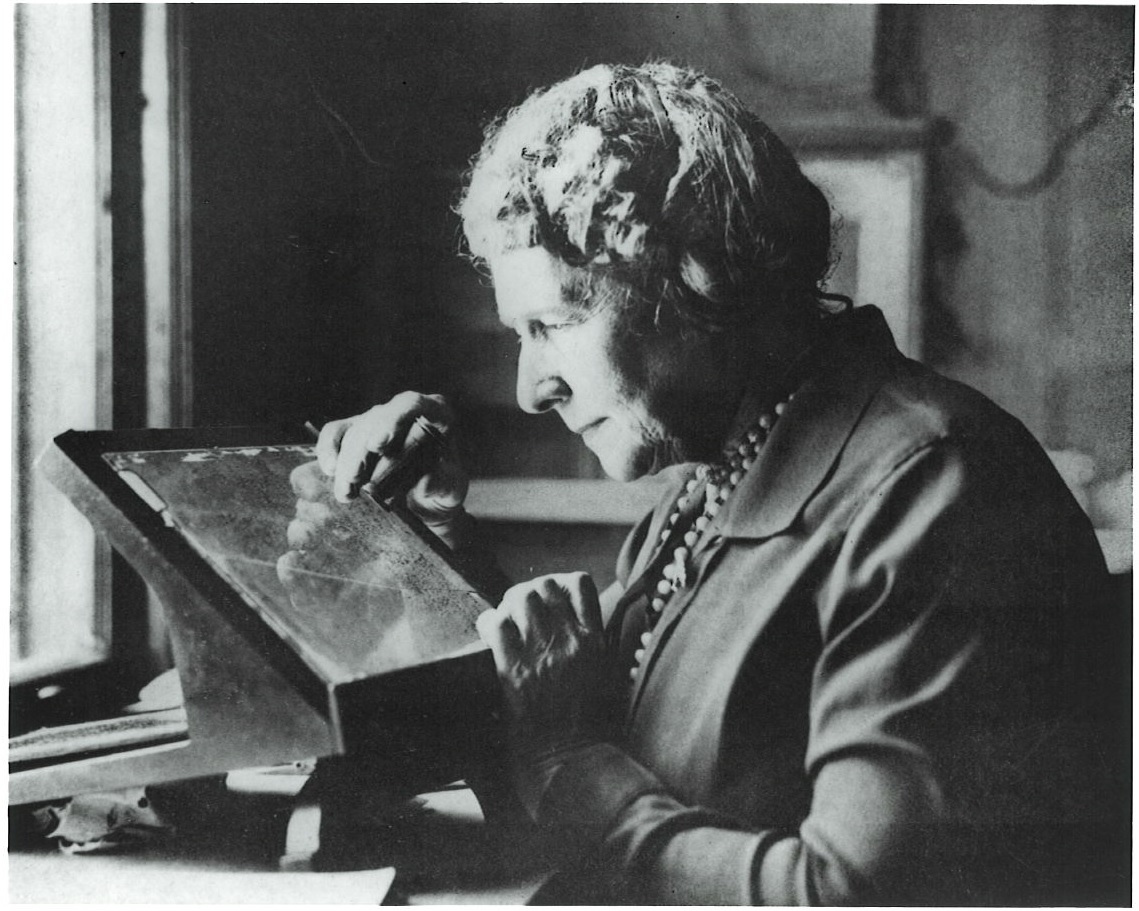
She held a small magnifying glass, and her eyes went over those black-and-white lines at great speed.
Cannon had an astonishing capacity for concentration and a gift for recognising patterns. To her those dry lines were not dead data but living things with characters of their own: in some stars’ barcodes the hydrogen features were bold and coarse, in others the fine grain of calcium ran all over. Among hundreds of thousands of sets of lines, she was looking for the law nature had hidden there.
That turn of mind seems to have come from her mother, who was the first person to teach her the stars. In an age that urged girls to marry and have children early, her mother used an old astronomy textbook to teach her to recognise the stars, and encouraged her to follow her own interests and study mathematics, chemistry and biology.
3. Putting the sky back in order
Before Cannon, people had tried to force the stars into classes lettered A to Q through the alphabet, but the system was cumbersome, stitched together, and full of contradictions.
After looking at tens of thousands of plates, Cannon made a bold decision: throw out the old man-made rules, and let the stars show their own.
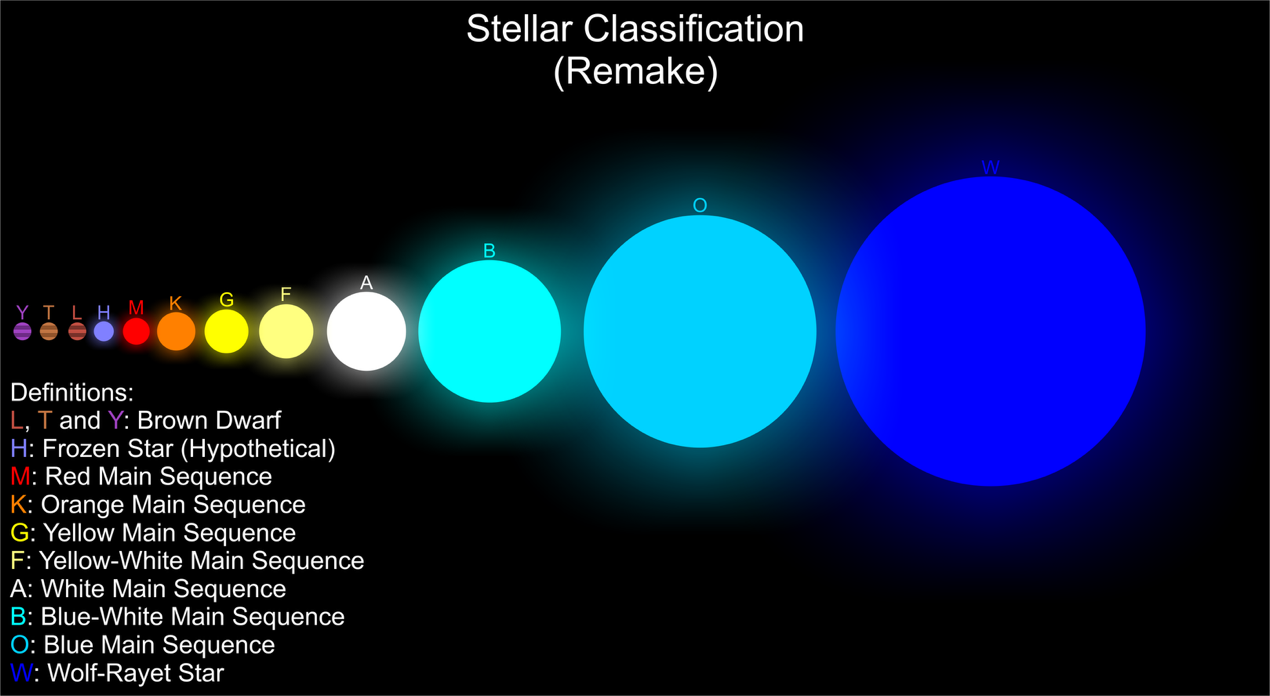
She cut away the repeated and redundant classes without hesitation, shuffled the ones that were left, and set out a new sequence, lean and elegant: O, B, A, F, G, K, M.
From the sheer number of plates she had read, Cannon saw that the logic of those barcodes was really the stars’ temperature:
- at the O end, violent, blazing giants burning with blue fire;
- running all the way to the M end, older, cooler stars giving off a mild red light.
4. Three stars a minute
Once that underlying frame was in place, Cannon showed an astonishing capacity for work.
For decades she sat at the same wooden desk almost every day. An assistant waited beside her with a pen, and Cannon needed only one look through the magnifier at the spectral lines on a plate to decide in an instant where the star belonged.
“G5! K0! A2!”
At her fastest she could classify three stars a minute.
More remarkable still, under that load of trained reflex and rapid judgement, her error rate was close to zero.
Over her lifetime she built a clear record, by her own hand, of around 350,000 stars.
Almost every star that the telescopes of her day could photograph clearly passed under her eye and into her register.
As it happens, she was a colleague and a friend of Henrietta Leavitt, the subject of the previous note.
Perhaps this too was some arrangement of fate: Cannon and Leavitt, the two most important women astronomers of that generation at Harvard, both lost their hearing when they were young.
And yet in those years two women whose world was going quiet pieced together the order of the universe on one silent glass plate after another.
One of them measured the stars. The other gathered them up.
5. Classifying is a way of understanding the world
In the end, the OBAFGKM sequence she established — the Harvard spectral classification — remains the gold standard for astronomers all over the world. Even the Sun over our heads is a “G-type star” in her scheme.
Later, once hundreds of thousands of stars that had been one undifferentiated muddle were settled neatly into the sequence from O to M, the laws of how stars evolve suddenly opened up. It was by looking at the huge family tree she had put in order that physicists finally worked out the whole life story of a star: how it is born, how it burns, and how it dies.
Annie Jump Cannon spent most of her life in that quiet office, and she was still doing astronomy a few weeks before her death in 1941.
The American Astronomical Society now awards the Annie Jump Cannon Award every year to a woman who has made an outstanding contribution to astronomy. And in 2019 the US Mint’s American Innovation dollar for Delaware — Cannon was born in Delaware — was dedicated to her, with the words “Classifying the Stars” on its face.
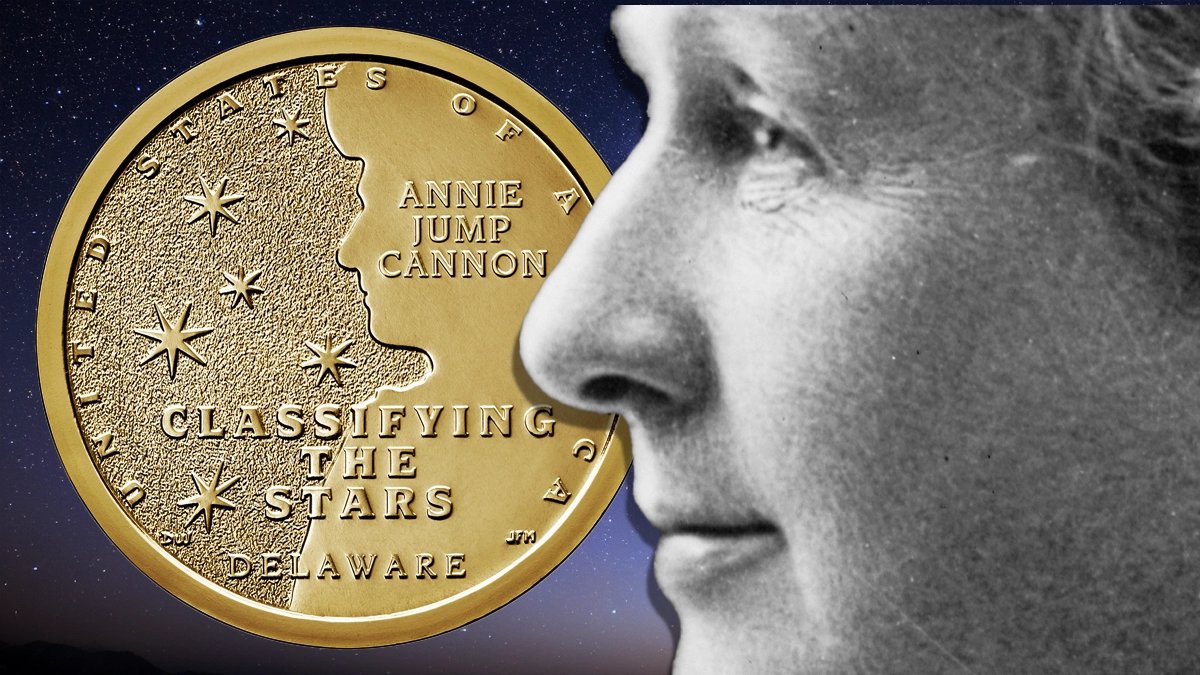
Image sources
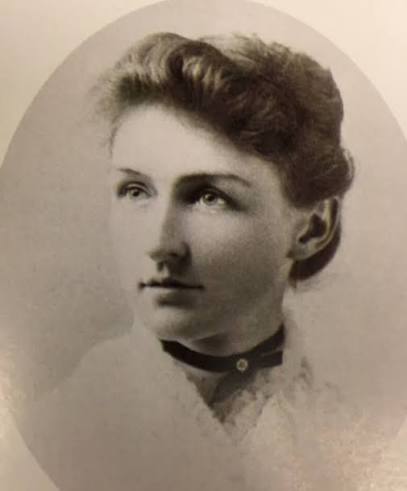
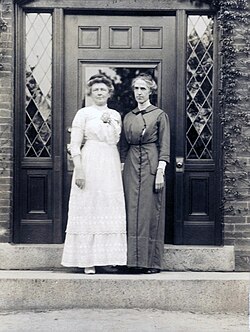
The images in this article are gathered from public sources. The portrait of the young Annie Jump Cannon, the photograph of her examining a plate at the viewing frame, and the photograph of her with Henrietta Leavitt at the door of the Harvard College Observatory are public historical photographs; the illustrated portrait at the top is a modern drawing. The spectral-class diagram is a remade chart circulating online: besides the seven types Cannon established — O, B, A, F, G, K, M — it also shows the W, L, T and Y types added later, and a hypothetical “H type” that is not an official class. The coin image is from the public promotional material for the 2019 Delaware edition of the US Mint’s American Innovation dollar.
Background to the fiction
This note is research for the original novel Before the Goliath Sinks, and the second in the series Women and the Sea of Stars; the first was on Henrietta Leavitt. The Keibir of the novel are exiled star cartographers who live by recording the universe; Cannon did the same work — putting a chaos of starlight back, star by star, where each one belonged, until the unknown became for the first time something that could be understood. The Chinese original of this article is at 拾起星星的女人.